Timmins' Trash Talkers Are Doing More Than Talking
In a city where complaints about litter are nothing new, a group of residents has found a way to turn individual efforts into something bigger, one garbage bag at a time.
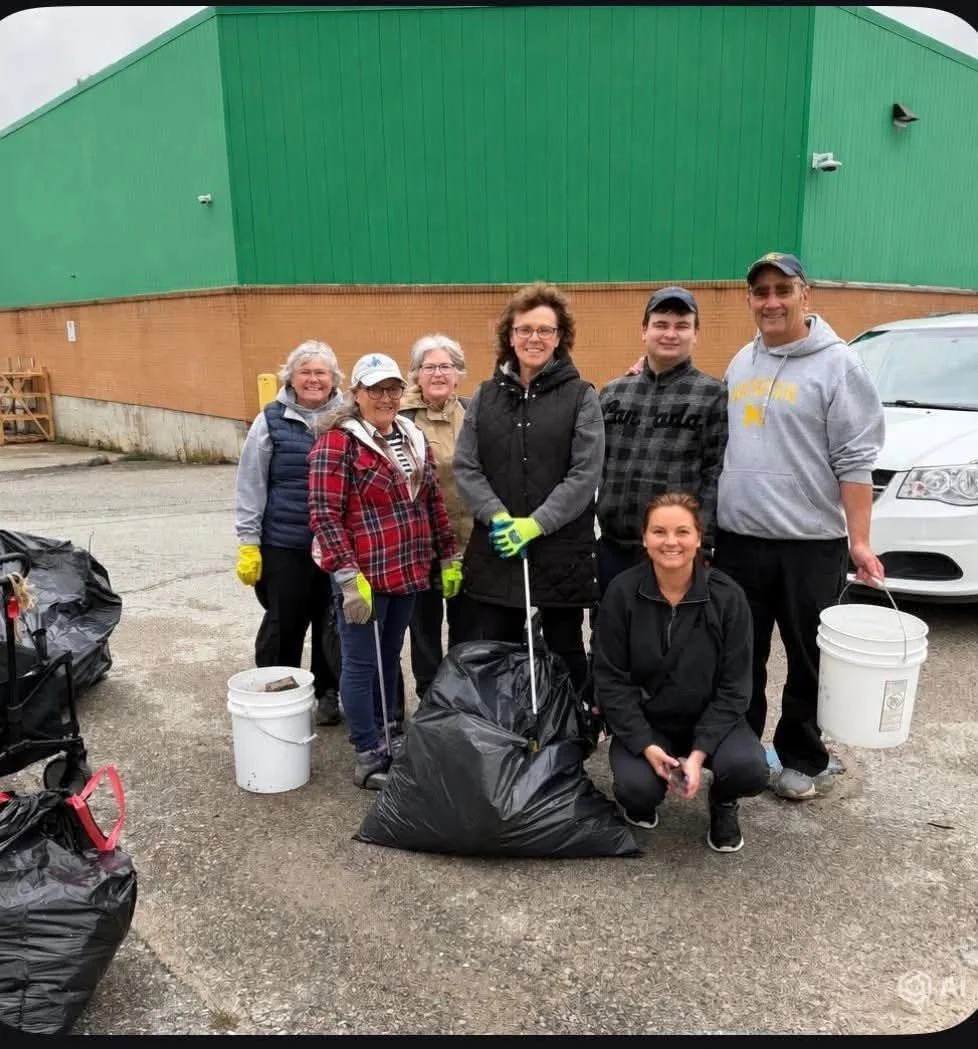
Before the Timmins Trash Talkers had a name, a Facebook group or a schedule, Jenny Gagnon was already picking up litter during her walks around the city. Tania Dallaire was doing much the same thing along the Terry Fox Trail, and other residents had developed similar habits of their own. None of them needed an organized event to get started. They had simply noticed garbage where it didn't belong and decided to do something about it.
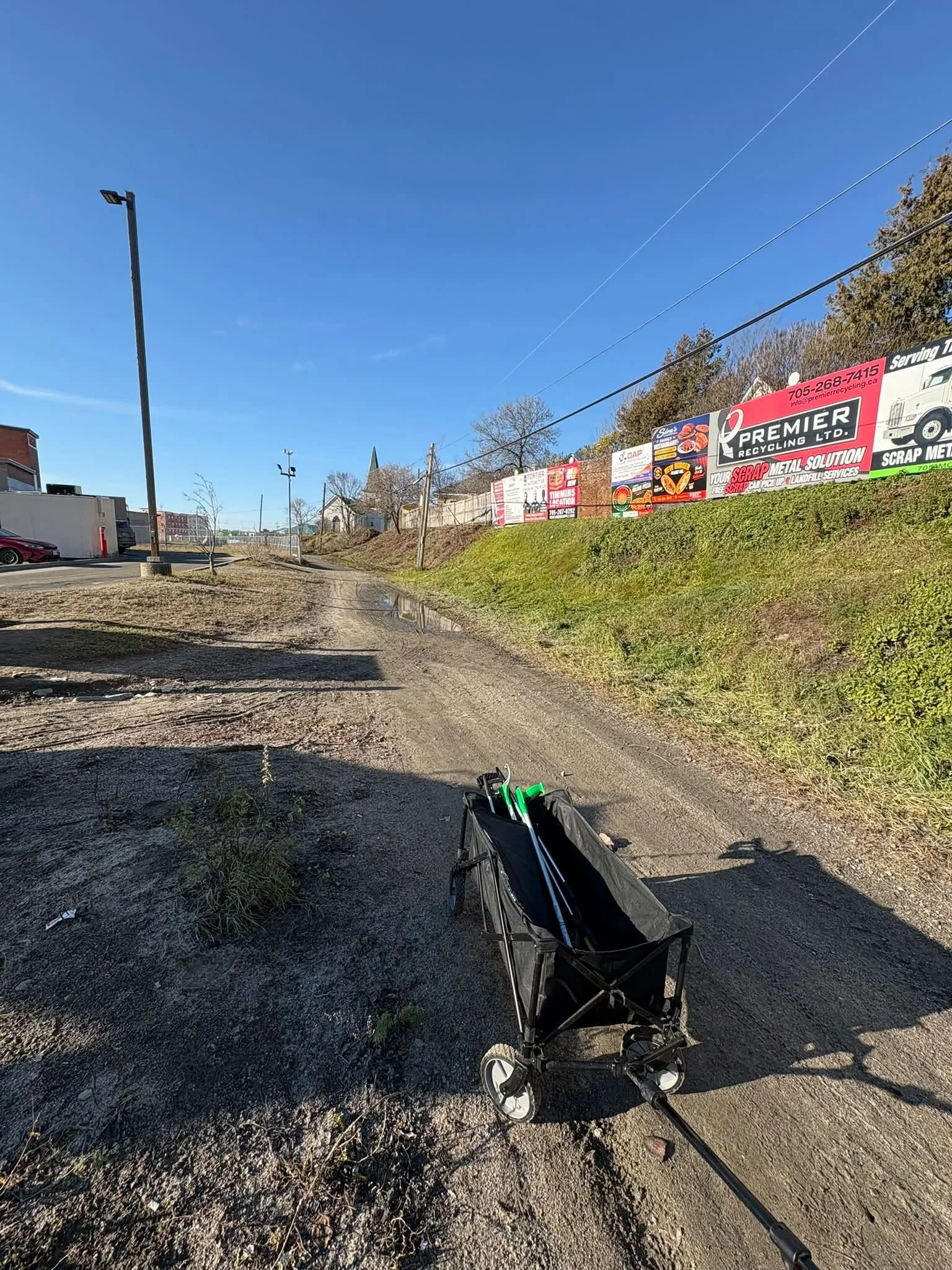
For Dallaire, it began shortly after moving into a home near the Terry Fox Trail. An enthusiastic walker, she appreciated having the trail so close to home, but the amount of garbage she encountered along the way was considerably less appealing. Rather than allow the litter to spoil her walks, she began collecting it herself, gradually cleaning an area she frequently enjoyed using.
Gagnon had much the same experience walking around Timmins, although her decision to share a photograph of her efforts online would eventually bring several like-minded residents together. "Jenny was the brave one," Dallaire recalled, crediting Gagnon for making that initial connection. People who had been quietly cleaning their own walking routes discovered others doing the same thing, and before long, they were organizing outings and collecting garbage together.
Today, the Trash Talkers generally attract between six and ten participants to their scheduled cleanups, depending on the day. The volunteers choose a location, gather their supplies and spend roughly an hour collecting litter from trails, neighbourhoods and public spaces throughout Timmins. For Dallaire, the work is "super satisfying," while Gagnon's explanation for volunteering is considerably less complicated: "I have the time, so why not?"
A familiar problem, and a familiar frustration
Complaints about litter are hardly new to Timmins. In June 2020, the Timmins Police Service reported receiving numerous complaints about garbage accumulating along Pine Street South, particularly near the route to the municipal landfill. Much of that problem was attributed to improperly secured loads, with waste ending up along roadsides instead of reaching its intended destination.
Residents have also taken matters into their own hands for years. In May 2025, South Porcupine residents Lorelea Anderson and Catherine St-Denis collected nine industrial garbage bags over two mornings after becoming frustrated with litter around the Bruce Y. Anderson had grown tired of seeing garbage every time she drove through the area, eventually recruiting a friend and purchasing supplies to clean it themselves.
The City of Timmins has organized community cleanups of its own. Its first Adopt-a-Block Community Cleanup Days in 2024 attracted ten organizations, seven businesses and 128 individual residents and youth, according to figures released by the municipality. Those numbers don't tell us whether Timmins has a growing litter problem, but they do demonstrate that residents and organizations have been willing to participate in cleaning up their community.
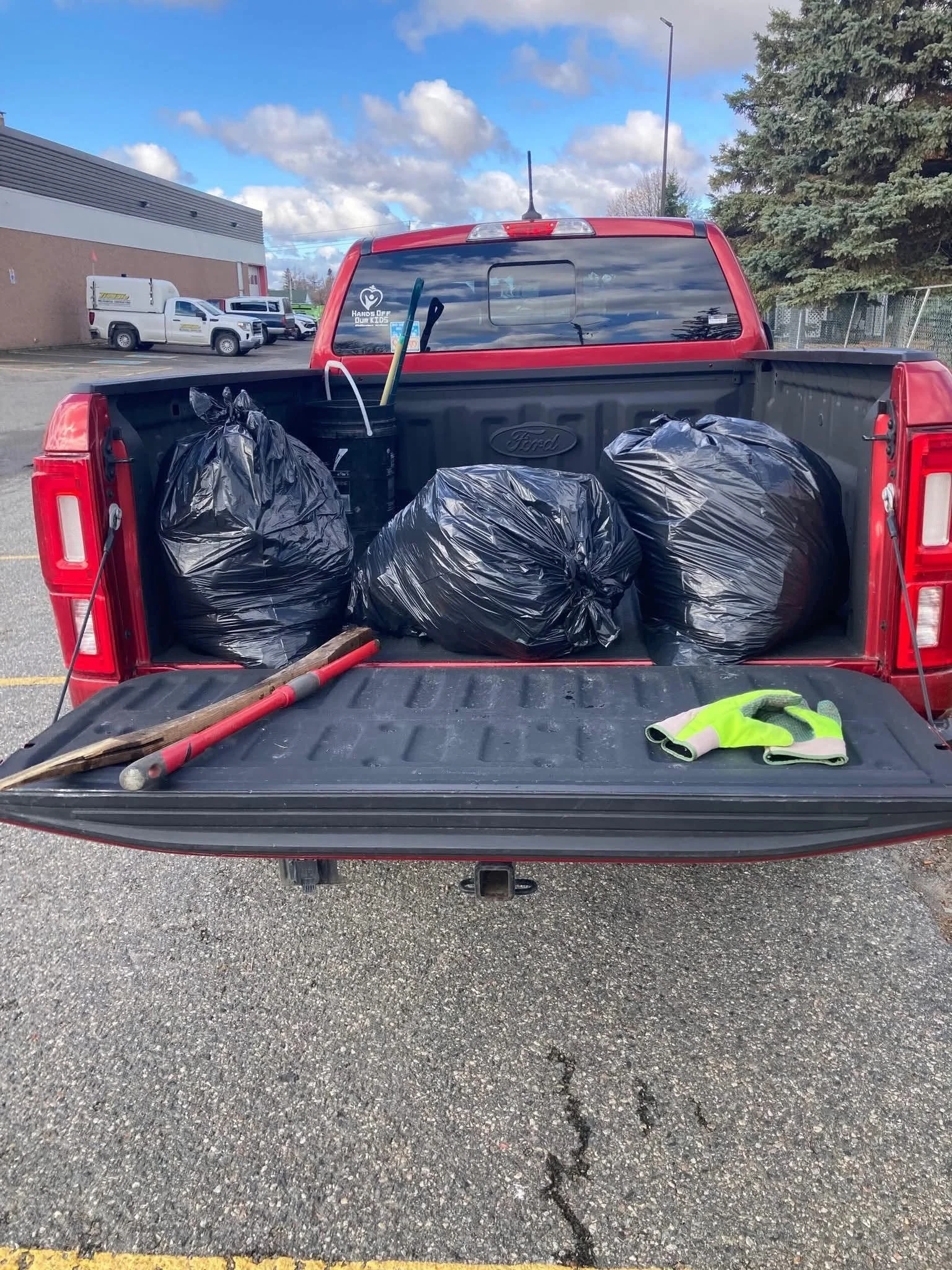
The Trash Talkers have built on that same willingness to act, creating a place where people can organize their efforts beyond the City's scheduled cleanup events. Their social media posts offer a glimpse of the work involved, including one outing where two residents filled five large garbage bags before running out of supplies. They hadn't even finished the trail.
Other volunteers have tackled areas near the former Value Village, the trail behind Tim Hortons and Food Basics, and locations around apartment buildings. Plans can change with the weather, but the purpose remains the same: find somewhere that needs attention and collect what others have left behind.
Of course, cleaning an area doesn't prevent somebody from leaving more garbage behind the following day. The volunteers know that some locations present recurring problems and that their efforts are only one part of keeping public spaces clean. As one of their community posts acknowledged, the work is "certainly not red carpet and glamorous but we sure make it look good."
The people behind the garbage bags
Among the group's most consistent participants is Ward 3 Councillor Bill Gvozdanovic, although his involvement didn't begin through his position on city council. According to Gagnon, he was already picking up litter independently before joining the Trash Talkers, something that has continued as part of his regular involvement with the group.
Gagnon describes him as someone who hasn't missed a cleanup session and credits him with keeping spirits high, encouraging volunteers and bringing a lighthearted attitude to the work. Despite his public position, the group regards him as another resident doing his part, collecting garbage alongside everyone else.
The volunteers have also received practical support from Meagan Baranyk, the City of Timmins' Community Programs Manager, who discovered the group through social media and was impressed by what she saw. According to Gagnon, Baranyk showed up during one of the group’s outings with gloves, personal protective equipment and other supplies. Baranyk’s email confirmed her support for helping the volunteers work safely.
"What I loved about the Trash Talkers was that they weren't waiting for someone else to do something," Baranyk explained in an email to Northern INK Journal. "They saw an opportunity to make a difference and took it upon themselves to act."
For Baranyk, the group's efforts reflect a broader approach to community involvement that she considers important to the City's Community Safety and Well-Being Plan. "Our Community Safety and Well-Being Plan is a community plan, and residents have an important role to play in making Timmins a better place for everyone," she said.
Gagnon acknowledges that the Trash Talkers occasionally encounter comments suggesting the City should be responsible for picking up the garbage instead. Those remarks have been relatively uncommon, however, and she describes the overall response from residents as overwhelmingly positive. People have offered encouragement, thanked the volunteers for their efforts and, in some cases, decided to become involved themselves.
She has also approached local business owners about garbage around their properties, sometimes asking why waste wasn't better secured or contained. Those conversations have helped her understand some of the challenges businesses encounter when managing their garbage, including circumstances that aren't always obvious to someone walking past a property. Rather than allowing the discussion to end with a complaint, Gagnon has found value in speaking directly with the people involved.
Looking beyond the litter
For Dallaire, the cleanups have also provided an opportunity to challenge assumptions about who is responsible for garbage in public spaces, particularly when that responsibility is placed on people experiencing homelessness.
She has noticed that litter is frequently blamed on the homeless population, even when there's little evidence to establish who left it behind. Along the Terry Fox Trail, she says she rarely encounters people experiencing homelessness despite regularly finding garbage. Based on her experiences cleaning the area, she suspects much of it comes from other people using the trail.
Her point isn't that one group of residents is entirely responsible while another is entirely innocent. Rather, she questions why people experiencing homelessness so frequently receive the blame for a problem that can involve anyone using the city's shared spaces.
Dallaire also brings a professional perspective to some of the public-health concerns associated with discarded litter. As a nurse working in hepatitis C care and education, she understands the risks associated with discarded needles and the importance of providing accurate information rather than allowing fear or stigma to shape public understanding.
The Trash Talkers have a sharps container among their cleanup equipment, and Dallaire emphasizes that while accidental needle injuries require prompt medical attention, the risk of hepatitis C transmission from a discarded community needle is very low. It's an important distinction, particularly when concerns about discarded needles become intertwined with assumptions about homelessness, substance use and the people who rely on public spaces.
Through her professional work, Dallaire also encourages residents to seek hepatitis C testing and treatment when needed. According to Dallaire, testing is available Monday through Friday at Liver Health Clinic, located at 330 Second Avenue, Suite 106, in Timmins. She wants residents to know that these services are available locally and that concerns about possible exposure or infection shouldn't prevent anyone from accessing medical care.
The Trash Talkers aren't claiming that collecting garbage will resolve homelessness, substance use or the larger challenges facing Timmins. Their immediate purpose is more modest, but the work has brought together residents with different experiences and perspectives who share an interest in improving the places they use.
A community that keeps showing up
Gagnon manages the Trash Talkers' Facebook community, where members organize outings, share photographs and encourage one another. She's made a point of maintaining a positive atmosphere, particularly when discussions about litter and municipal responsibility have the potential to become arguments about the city's problems.
Interestingly, that approach hasn't required much intervention. Gagnon says she's never had to ban members or remove anyone from the group, and the encouragement has extended well beyond those who regularly attend cleanups. Residents have sent messages, left supportive comments and occasionally stopped to thank volunteers while they're working.
Even the group's name reflects a sense of humour. Members voted on what to call themselves, with Trash Talkers ultimately winning out over another contender: Pickup Artists. Considering the work involved, either name might have served them well.
The volunteers are also realistic about what they can accomplish. In one community post, the group acknowledged that Timmins faces much larger challenges, describing its activities as "a small and humble part of the solution." Gagnon expressed a similar sentiment when asked about some of the broader problems facing the city, admitting, "I don't know what the answer is."
That uncertainty hasn't discouraged her from continuing to help where she can. As Gagnon put it during the interview, "You can't just sit at home and think you're going to change the world." Northern INK Journal approached the group about its work; the Trash Talkers had not asked for favourable coverage.
With winter approaching, the Trash Talkers are wrapping up their scheduled cleanups for the year. In a season-ending message, the group thanked everyone who participated, contributed supplies or offered encouragement throughout the season, recognizing the time and effort volunteers had given to improving their surroundings.
But the end of organized outings doesn't mean the group is finished until spring. Residents who want to get involved can join the Trash Talkers' Facebook community, participate in future group cleanups or simply collect litter independently in the areas they frequent. Whether someone fills several garbage bags or picks up a handful of litter during an afternoon walk, the group offers a place to share those efforts with neighbours who appreciate and encourage the work.
It's an invitation that reflects how the Trash Talkers began, with residents doing what they could independently before discovering others who shared the same interest. Now, someone who decides to bring a garbage bag along on their next walk doesn't necessarily have to do it alone, even when there isn't a scheduled cleanup to attend.
As the group reminded its members in its season-ending message, "Just because we are done with scheduling doesn't mean we have to stop the process." And for anyone wondering where to begin, the volunteers offered one final suggestion: "Leave it better than how you found it!"